Introduction
Lemon Meringue Layer Cake combines the bright, citrusy freshness of lemon with fluffy meringue and tender cake layers, creating a show-stopping dessert perfect for any occasion. This delightful cake offers a lovely contrast of textures and flavors that will impress your family and friends.
Crafting this recipe does take some time, but the resulting layers of fluffy cake, tangy lemon curd, and sweet meringue make it worth every minute. It's a wonderful way to elevate your baking skills and create a beautiful centerpiece for your dessert table.
Ingredients
- 2 cups all-purpose flour
All-purpose flour forms the structure of the cake, providing stability while still keeping it light and fluffy. Its gluten content allows the cake to rise properly and holds the lemon curd fillings between layers. - 1 ½ cups granulated sugar
Sugar not only sweetens the cake but also impacts the texture. It helps create a moist crumb in the layers and provides the necessary sweetness to balance the tartness of the lemon. - ½ cup unsalted butter, softened
Butter adds richness and flavor to the cake. It contributes to a tender crumb by creaming with the sugar, which helps incorporate air and sets the base for a light texture. - 1 cup milk
Milk adds moisture to the cake batter, ensuring that the final product is soft and tender. It also helps in activating the baking powder for proper rising. - 3 large eggs, separated
Eggs are essential for structure, moisture, and flavor in the cake. The whites will be used for the meringue topping while the yolks enrich the cake batter. - 1 tablespoon lemon zest
Lemon zest amplifies the lemon flavor in both the cake and the curd, providing a fragrant aroma and a burst of citrus that brightens the overall taste. - 3 tablespoons baking powder
Baking powder acts as a leavening agent, helping the cake rise to achieve that light and fluffy texture. It’s essential for the cake’s lift and volume. - ¼ teaspoon salt
Salt enhances the overall flavor of the cake, balancing the sweetness and accentuating the lemon. It plays an important role in the chemical reactions within the batter. - 1 cup lemon juice
Fresh lemon juice is used for the lemon curd and adds the necessary tartness that defines the meringue flavor profile. Its acidity also helps brighten and balance the sweetness in the cake. - 1 tablespoon cornstarch
Cornstarch helps thicken the lemon curd, giving it the ideal creamy consistency and reducing graininess while smoothing out the texture. - ½ teaspoon cream of tartar
Cream of tartar stabilizes the egg whites when whipping them for meringue. It helps create a sturdy foam structure so that the meringue holds its shape and doesn’t weep. - 1 teaspoon vanilla extract
Vanilla extract adds a warm flavor depth to the cake, balancing the acidity of the lemon with its sweet notes.
Directions & Preparation
Step 1: Preheat the oven to 350°F (175°C) and prepare cake pans.
Preheating ensures that the cake layers start cooking immediately and evenly when poured into the pans. Preparing your pans—by greasing them and possibly lining with parchment paper—will prevent sticking and make removal easier after baking.
Step 2: Whisk together dry ingredients: flour, sugar, baking powder, and salt.
This step ensures that the leavening agent is evenly distributed throughout the batter, which is crucial for achieving a consistent rise in the cake layers. Whisking the dry ingredients also helps to aerate them, which contributes to a lighter cake.
Step 3: Cream together softened butter and sugar until light and fluffy.
Creaming the butter with sugar incorporates air into the mixture, which is critical for a light cake. This process helps create tiny air pockets that expand during baking, resulting in tenderness and a delicate crumb.
Step 4: Add in egg yolks one at a time, mixing well after each addition.
Incorporating egg yolks adds richness and moisture to the batter. Mixing one at a time allows for better emulsification, ensuring that the mixture is homogeneous and contributes to the cake's overall structure.
Step 5: Mix in milk and lemon zest until smooth.
This step not only adds moisture to the batter, but also enhances the cake with vibrant citrus notes. Ensuring a smooth batter helps in even baking and a uniform texture.
Step 6: In a separate bowl, beat egg whites until soft peaks form, adding cream of tartar.
Beating egg whites with cream of tartar stabilizes the meringue's structure. Soft peaks indicate that the egg whites are beginning to aerate properly, which will yield a fluffy meringue for topping the cake.
Step 7: Gradually add sugar to egg whites, beating until stiff peaks form.
Gradually incorporating sugar ensures that it dissolves properly and doesn’t weigh down the egg whites. Beating until stiff peaks form gives a volume to the meringue, necessary for creating a light topping that holds its shape.
Step 8: Gradually fold the egg whites into the cake batter.
Folding in the egg whites gently is crucial to maintain their aeration, which will lift the cake as it bakes. This blending of mixtures ensures that the final batter retains its airy quality.
Step 9: Divide the batter among the prepared cake pans and bake for 25-30 minutes.
Dividing the batter helps ensure even baking, which is essential for uniform layers. Checking for doneness by lightly pressing the cakes is a cue to look for—they should spring back without leaving an impression.
Step 10: Prepare lemon curd while the cakes are baking.
Lemon curd needs to cool before using it between cake layers. Preparing it while the cakes bake maximizes your time and allows the curd to thicken as it cools, which improves its consistency for spreading.
Step 11: Beat egg yolks with sugar, lemon juice, and cornstarch over a double boiler until thick.
This method closely controls the heat, preventing curdling while cooking the yolks. Beating until thick ensures the curd has the luxurious texture desired for filling, preventing it from being overly runny.
Step 12: Once thickened, remove from heat and stir in butter until melted.
Stirring in butter off heat creates a beautiful smooth finish on the lemon curd, enriching the flavor and providing a glossy, appealing sheen. Allow it to cool before using.
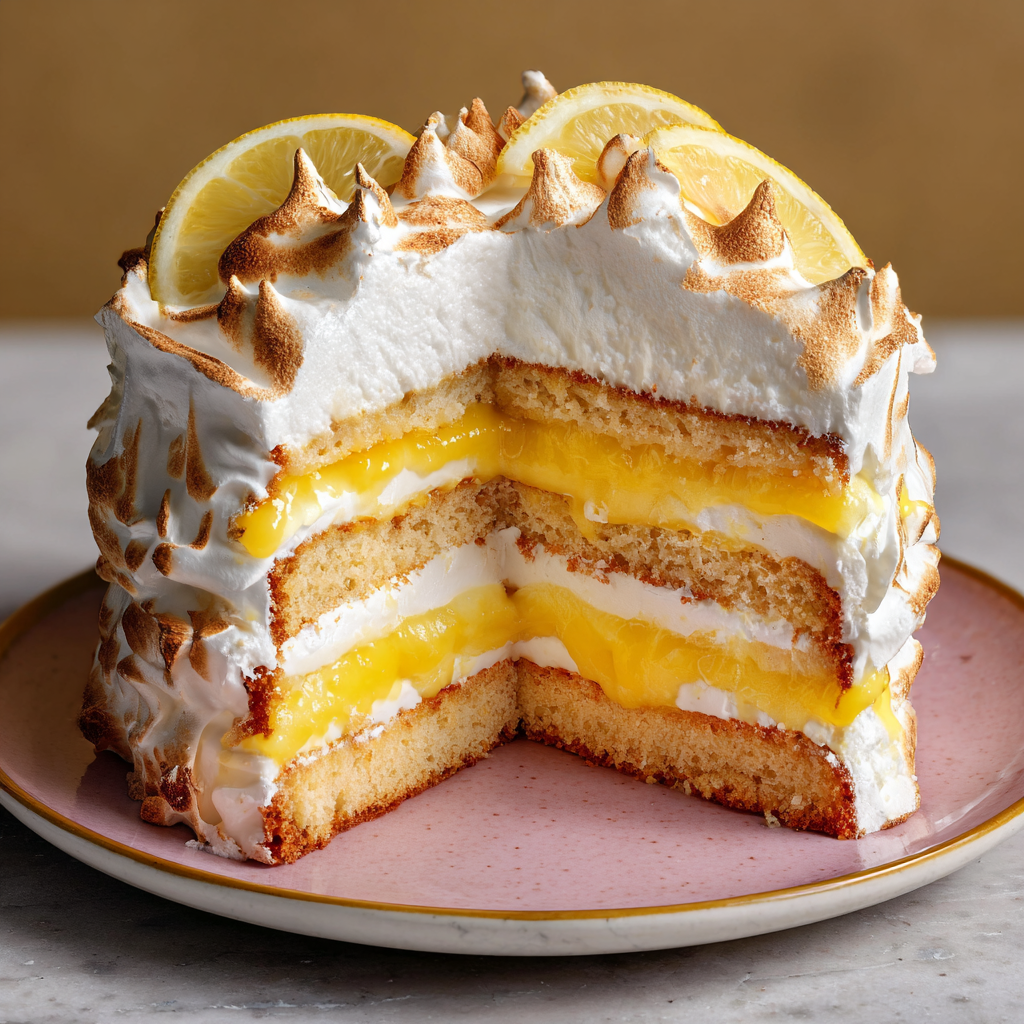
Step 13: After cakes have cooled, layer them with lemon curd in between.
Layering curd between the cake layers creates a delicious contrast in flavors and textures. Spreading it evenly ensures that every slice enjoys the full experience of the tangy lemon flavor paired with moist cake.
Step 14: Spread meringue over the top layer of the cake and toast with a kitchen torch.
Spreading meringue and toasting it adds a delightful visual appeal and textural contrast. Using a kitchen torch allows for even browning, transforming the meringue into a toasted, crunchy topping that contrasts beautifully with the soft layers below.

Mastering Lemon Curd for Layering
The key to a luscious lemon curd lies in the proper cooking technique. It should be cooked over low heat, whisking constantly until it’s thickened to avoid scrambling the eggs. The cooling period is critical as it firms up, ensuring it can hold its structure between layers without running. Choose fresh, high-quality lemons for the best flavor—this step is what defines your cake's citrus impact.
How to Achieve Perfect Meringue
Creating the perfect meringue takes patience and precision. Always start with clean equipment to avoid oils from affecting the egg whites. Adding sugar gradually helps maintain the stability of the peaks formed. The meringue should be glossy and hold stiff peaks to ensure a successful topping that won't weep. Precise toasting with a kitchen torch not only enhances flavor but provides a beautiful aesthetic for the final layer.
Layering Techniques That Shine
Layering your cake is not just about stacking, but creating an appealing visual experience. Use an offset spatula for smooth application of lemon curd, ensuring it extends to the edges. Consider leveling your cake layers to make stacking easier and to ensure consistent height. The visual appeal can be enhanced with careful placement of meringue, which can be swirled or spread as per your preference for maximum impact.
FAQs
What should I do if my cake layers are too dry?
If your cake layers turn out dry, consider brushing them with a simple syrup made of equal parts sugar and water to add moisture. This adds sweetness while helping to rejuvenate the texture.
Can I use bottled lemon juice for the curd?
While bottled lemon juice can be used in a pinch, fresh lemon juice is highly recommended for a brighter, more vibrant flavor. The recipe relies on the zingy profile of fresh lemons to achieve the desired tartness.
What can I do if my lemon curd is too runny?
If your lemon curd doesn’t thicken as expected, continue cooking it gently over low heat while whisking until it reaches the desired consistency. Adding a bit more cornstarch dissolved in water can also help thicken it gradually.
Is there a way to make this recipe in a smaller quantity?
Yes, you can halve the ingredients to create a smaller cake. Adjust the baking time by checking for doneness a few minutes earlier, depending on the size of the pans used.
How can I fix an overcooked meringue topping?
Unfortunately, once the meringue is overcooked, it cannot be undone. However, ensure you're always monitoring closely while toasting and consider building an entirely fresh meringue if you haven’t sliced into the cake yet.
What types of fillings can I use besides lemon curd?
You can experiment with other fruit curds or even a light whipped cream, but keep in mind that these will alter the flavor profile significantly. Customize to your taste while ensuring a balance with your meringue topping.
Conclusion
The Lemon Meringue Layer Cake is a delightful showcase of flavors and textures, sure to please anyone with a penchant for citrus desserts. With layers of moist cake, tangy curd, and airy meringue, each bite is a little piece of heaven.
Whether you’re celebrating a special occasion or simply indulging in a sweet treat, mastering this recipe can elevate your baking to new heights. Enjoy the process and share your masterpiece with those you love!
Recipe Card
Decadent Lemon Meringue Layer Cake Recipe
Ingredients
Method
- Preheat the oven to 350°F (175°C) and prepare cake pans.
- Whisk together dry ingredients: flour, sugar, baking powder, and salt.
- Cream together softened butter and sugar until light and fluffy.
- Add in egg yolks one at a time, mixing well after each addition.
- Mix in milk and lemon zest until smooth.
- In a separate bowl, beat egg whites until soft peaks form, adding cream of tartar.
- Gradually add sugar to egg whites, beating until stiff peaks form.
- Gradually fold the egg whites into the cake batter.
- Divide the batter among the prepared cake pans and bake for 25-30 minutes.
- Prepare lemon curd while the cakes are baking.
- Beat egg yolks with sugar, lemon juice, and cornstarch over a double boiler until thick.
- Once thickened, remove from heat and stir in butter until melted.
- After cakes have cooled, layer them with lemon curd in between.
- Spread meringue over the top layer of the cake and toast with a kitchen torch.
Notes
Additional serving suggestions: pair with a crisp salad, garlic bread, or roasted seasonal vegetables for balance.
For make-ahead, prep components separately and assemble just before heating to preserve texture.
Taste and adjust with acid (lemon/vinegar) and salt right at the end to wake up flavors.