Introduction
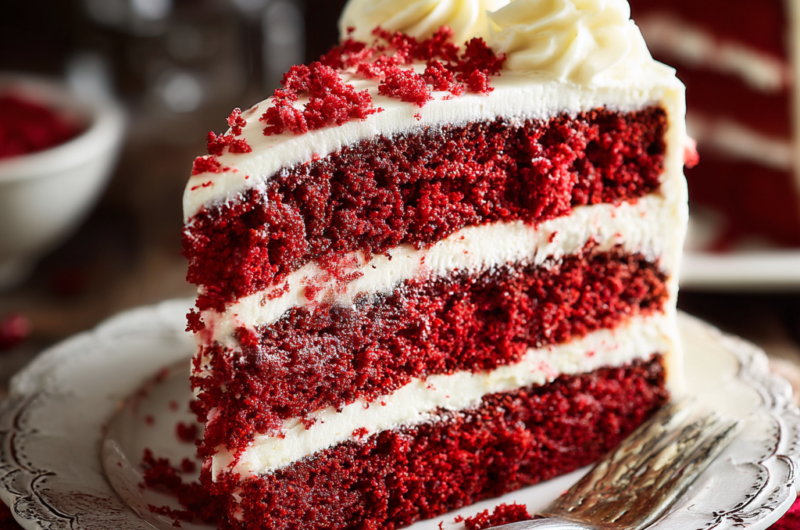
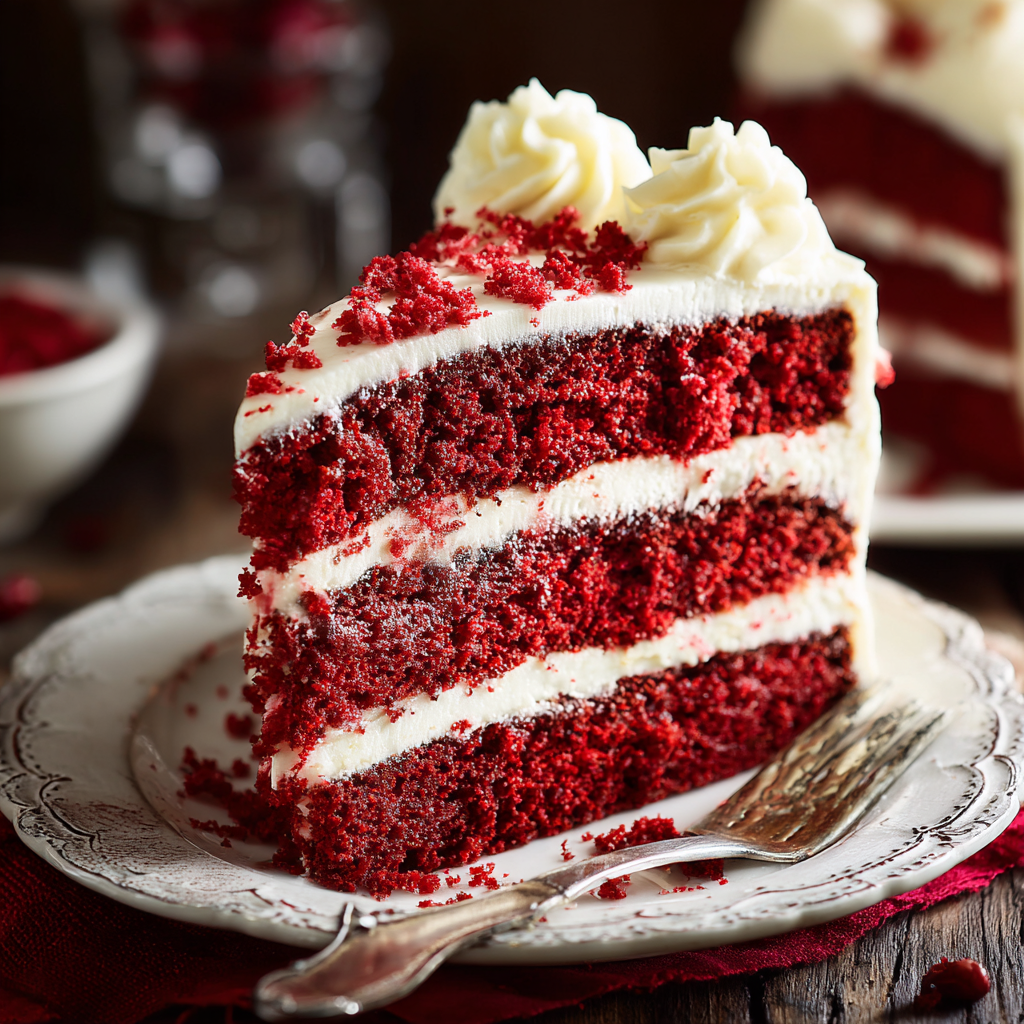
Red velvet cake is much more than just a dessert; it has a rich history and a striking appearance that captivates anyone who lays eyes on it. The deep red color, often contrasted with a creamy white frosting, makes this cake a showstopper for any occasion.
With its slight cocoa flavor and a hint of tanginess, red velvet cake offers a unique taste that sets it apart from other desserts. The blend of buttermilk and vinegar not only adds to the flavor profile but also contributes to the cake’s moist and tender crumb, making each slice a delightful experience.
Ingredients
- 2 1/2 cups all-purpose flour
Flour is the backbone of any cake, providing structure. All-purpose flour strikes a balance between tenderness and stability, allowing the cake to rise beautifully while maintaining its moist texture. - 1 1/2 cups granulated sugar
Sugar not only sweetens the cake but also contributes to its moisture. It helps create a tender crumb and enhances the overall flavor by balancing the cocoa and tangy notes. - 1 cup vegetable oil
Oil provides richness and moisture to the cake, ensuring it stays soft and tender for longer. The neutral flavor allows the other ingredients to shine without overpowering the cake. - 1 cup buttermilk
Buttermilk adds both moisture and a slight tang, which gives the cake its characteristic flavor. The acidity interacts with baking soda to help the cake rise and stay fluffy. - 2 large eggs
Eggs lend structure and richness to the cake. They help bind the ingredients together while adding moisture and a beautiful golden color to the batter. - 2 tablespoons unsweetened cocoa powder
Cocoa powder gives the cake its subtle chocolate flavor and enhances the overall depth of flavor. It also contributes to the characteristic reddish hue when combined with the other ingredients. - 1 teaspoon vanilla extract
Vanilla extract adds warmth and enhances the cake’s overall flavor profile. It brings together the other flavors and helps to elevate the dessert. - 1 teaspoon baking soda
Baking soda is a leavening agent that works with the acidic buttermilk to create lift in the cake. It helps achieve a light and airy texture. - 1 teaspoon white vinegar
Vinegar reacts with baking soda to produce carbon dioxide, which helps the cake rise. It also contributes to the cake's unique tang, complementing the buttermilk. - 1 tablespoon red food coloring
Food coloring is essential for achieving the vibrant red hue that red velvet cake is known for. It visually differentiates it from other cakes. - Cream cheese frosting (for topping)
Cream cheese frosting adds a tangy, rich sweetness that contrasts beautifully with the subtle flavors of the cake. It also brings a luxurious texture that enhances each bite.
Directions & Preparation
Step 1: Preheat your oven to 350°F (175°C) and prepare the cake pans.
Preheating ensures your cake rises properly. Prepare two 9-inch round cake pans by greasing and flouring them, which will prevent sticking and facilitate easy removal once the cakes are baked.
Step 2: In a large bowl, mix the flour and cocoa powder together, then set aside.
Combining dry ingredients initially helps to evenly distribute the cocoa powder throughout the flour. This step aids in ensuring a consistent flavor and texture without any clumps.
Step 3: In another bowl, mix together the sugar and vegetable oil until well combined.
Creaming sugar and oil together creates a base for the batter. This step allows for the sugar to dissolve, contributing to a smoother batter and helping to aerate the mixture, promoting a lighter cake.
Step 4: Add the eggs one at a time, incorporating each fully before adding the next.
Incorporating eggs gradually allows for better emulsification, creating a uniform batter. This step is crucial for a well-structured cake, as it helps bind the ingredients together effectively.
Step 5: Mix in the buttermilk, vanilla, and vinegar until combined; then incorporate the food coloring.
Adding buttermilk and vinegar introduces moisture and acidity, which is essential for reacting with baking soda. Using food coloring last ensures even distribution without overmixing.
Step 6: Gradually add the flour mixture to the wet ingredients, mixing until just combined.
Mixing until just combined helps avoid overworking the batter, which can lead to a dense cake. This step is crucial for achieving the desired light texture.
Step 7: Divide the batter evenly between the prepared pans and smooth the tops.
Dividing the batter ensures even baking. Smoothing the tops also helps achieve a flat surface on the cakes, which is essential for stacking and frosting later.
Step 8: Bake in the preheated oven for 25-30 minutes, or until a toothpick comes out clean.
Monitoring baking time ensures each layer is cooked without overbaking. A toothpick test is a reliable method for checking doneness, removing them from the oven while still moist for the best texture.
Step 9: Let the cakes cool in the pans for 10 minutes before transferring to a wire rack.
Allowing the cakes to cool slightly helps them firm up for easier handling. Carefully transferring them onto a wire rack completes the cooling process yet maintains the integrity of the cakes.
Step 10: Once cooled, frost with cream cheese frosting as desired.
Frosting enhances the flavor and visual appeal of your red velvet cake. It's best to frost when the cakes are completely cool to avoid melting the frosting, ensuring a beautiful finish.

The Origins of Red Velvet Cake
The origins of red velvet cake can be traced back to the 1920s, with various stories about its unique color and flavor. Some say it emerged from the use of fermented cocoa, while others attribute its popularity to its striking aesthetics. Its resurgence in the 1980s and 1990s made it a symbol of indulgence, cementing its place in American dessert culture.
Elevating Your Cream Cheese Frosting
To elevate your cream cheese frosting, consider incorporating flavors like orange zest or a hint of almond extract. Adding heavy cream can also enhance its texture, making it fluffier and easier to spread. Experimenting with different ratios of cream cheese and butter can lead to a frosting that perfectly complements the velvety cake.
Pairing Flavors with Red Velvet Cake
When pairing flavors with red velvet cake, consider complementary profiles like fresh berries, chocolate ganache, or even a scoop of vanilla bean ice cream. The cake's rich and tangy profile allows for flexibility, making it a versatile dessert for pairing with various accompaniments, enhancing its unique flavor experience.
FAQs
What if my batter is too thick?
If your batter is too thick, ensure you’ve measured your flour correctly. Adding a small amount of buttermilk can help reach the desired consistency and improve the cake's texture.
Why is my cake too dry or crumbly?
Dryness can occur if the cake is overbaked or if there was insufficient moisture in the batter. Be sure to check the cake a few minutes before the recommended baking time.
How can I adjust the recipe for different cake sizes?
To scale the recipe, calculate the volume of your pans and adjust the batter accordingly. You may also need to adjust baking times based on the thickness of the layers.
Can I use other colors instead of red?
Yes, you can experiment with other colors by using different food coloring. However, the quantity and type of other ingredients may need to be adjusted for the best results.
Why does my cake have a bitter taste?
A bitter taste may result from using too much cocoa powder or not adequately balancing the sugar levels. Ensure you’re measuring ingredients accurately.
How do I achieve a smooth frosting?
For a smooth frosting, ensure both your cream cheese and butter are at room temperature before mixing. Whip the frosting until fluffy to reduce lumps.
Conclusion
Baking a red velvet cake from scratch allows you to engage with a time-honored classic, transforming simple ingredients into a festive centerpiece. Each slice tells a story of creativity and tradition, celebrating both taste and visual appeal.
With its eye-catching color and inviting flavor, red velvet cake is perfect for any occasion, from birthdays to anniversaries. Embrace the joy of baking and share this delicious treat with those you love.
Recipe Card
The Allure of Red Velvet Cake from Scratch
Ingredients
Method
- Preheat your oven to 350°F (175°C) and prepare the cake pans.
- In a large bowl, mix the flour and cocoa powder together, then set aside.
- In another bowl, mix together the sugar and vegetable oil until well combined.
- Add the eggs one at a time, incorporating each fully before adding the next.
- Mix in the buttermilk, vanilla, and vinegar until combined; then incorporate the food coloring.
- Gradually add the flour mixture to the wet ingredients, mixing until just combined.
- Divide the batter evenly between the prepared pans and smooth the tops.
- Bake in the preheated oven for 25-30 minutes, or until a toothpick comes out clean.
- Let the cakes cool in the pans for 10 minutes before transferring to a wire rack.
- Once cooled, frost with cream cheese frosting as desired.
Notes
Additional serving suggestions: pair with a crisp salad, garlic bread, or roasted seasonal vegetables for balance.
For make-ahead, prep components separately and assemble just before heating to preserve texture.
Taste and adjust with acid (lemon/vinegar) and salt right at the end to wake up flavors.